

For institutional buyers, choosing the right government vehicle supplier in Dubai means the difference between a fleet that arrives on time, fully documented, and mission-ready — and one that stalls in customs, arrives out of spec, or fails within the first year of field deployment.
Milele Motors is a UAE-based vehicle exporter with over 40 years of operation, supplying brand-new vehicles exclusively to NGOs, government agencies, embassies, hospitals, defense organizations, and development institutions worldwide. This guide explains how institutional fleet procurement from the UAE works, why Dubai is the preferred sourcing origin for serious buyers, and what to verify before committing to a supplier.
Dubai is the preferred fleet sourcing hub for institutional buyers because it combines access to 40+ international automotive brands, a low-tax trading environment, and one of the world’s most capable export ports, all under one geography.
The UAE applies a standard 5% VAT on vehicle purchases, with qualifying export transactions typically zero-rated. This creates an immediate and meaningful cost advantage over equivalent vehicles sourced from Europe, North America, or other high-tax markets. For buyers procuring 20, 50, or 200 units, that differential compounds into a material budget saving on every order cycle.
Jebel Ali Port — the largest port in the Middle East — provides direct shipping routes to East Africa (Mombasa, Dar es Salaam, Djibouti), West Africa (Lagos, Tema), South Asia (Karachi, Colombo, Mumbai), and Southeast Asia. Transit times are shorter and freight costs lower than European or American alternatives for the majority of Milele’s institutional client markets.
Finally, UAE-based exporters operating at institutional scale understand the documentation requirements of government and NGO procurement frameworks — certificate of origin, commercial invoice, bill of lading, customs clearance paperwork, and any destination-country import compliance documentation — and manage them as a standard part of the export service.
Milele Motors is one of the UAE’s most established institutional vehicle suppliers, with over 40 years of continuous operation and 100,000+ vehicles exported since inception. Milele supplies brand-new vehicles to NGOs, government ministries, embassies, hospitals, tourism operators, and defense organizations across Africa, Asia, and globally.
Milele deals exclusively in brand-new vehicles. This is a foundational policy, not a commercial preference — Milele has never supplied used or second-hand vehicles, and does not do so under any circumstances. For institutional buyers whose procurement frameworks require new vehicles with manufacturer warranties, this provides a clear, auditable guarantee.
Milele’s institutional supply capability spans:
Institutional fleet procurement from the UAE follows a structured sequence. Understanding each stage helps procurement teams plan timelines, prepare documentation, and avoid the delays that typically arise when stages are skipped or rushed.
Needs Assessment and Vehicle Specification
Fleet procurement begins before the supplier is contacted. Buyers should define vehicle categories required (pickups, SUVs, ambulances, buses, trucks), make and model preferences, drivetrain and transmission, fuel type, LHD or RHD based on destination-country driving convention, specification level, quantity per category, color and livery requirements, destination port, and required delivery timeline.
Providing complete specifications at the inquiry stage allows Milele Motors to return accurate, comprehensive quotations covering per-unit pricing, documentation, freight, and delivery timelines without follow-up rounds of clarification.
Tender and Supplier Selection
Most government agencies and large NGOs procure vehicles through formal tender processes. Suppliers are evaluated against price, brand availability, export track record, documentation capability, and delivery reliability. Buyers conducting due diligence should verify years of operation, new-vehicle exclusivity, brand partnerships, and institutional client references.
Vehicle fleets represent the second-largest overhead cost for humanitarian organizations after staff expenses, with the global humanitarian fleet estimated at between 70,000 and 80,000 vehicles and an annual asset and operating cost exceeding $1 billion. At this scale, supplier selection is a consequential decision — not an administrative one.
Milele Motors has been operational for over 40 years, maintains partnerships with 40+ international brands, and deals exclusively in brand-new vehicles — meeting the compliance requirements of most institutional procurement frameworks without exception.
Order Placement and Delivery Timeline
Once a supplier is selected and a purchase order confirmed, Milele places factory or distributor orders and manages the full delivery chain: procurement, pre-delivery inspection, documentation preparation, freight booking, and port coordination. Delivery timelines for most standard configurations range from 30 to 90 days from order confirmation to vehicle readiness at Jebel Ali Port.
Institutional procurement spans a wide range of vehicle types. The following categories represent the most frequently ordered by NGO and government clients through Milele Motors.
4×4 Pickup Trucks: The Toyota Hilux, Nissan Navara, and Mitsubishi L200 are among the most requested models for field operations across Africa and Asia. They combine payload capacity, off-road capability, long service intervals, and widely available spare parts in destination markets.
SUVs and Patrol Vehicles: The Toyota Land Cruiser 70, 200, and 300 Series remain the institutional benchmark for demanding terrain. Embassies and security agencies frequently specify these models in both LHD and RHD configurations.
Ambulances and Medical Vehicles: Health ministries, NGO health programs, and hospital networks source ambulance-configured and mobile clinic vehicles through Milele Motors. Milele offers ambulance fabrication and mobile clinic configuration as a dedicated service vertical — vehicles are supplied new and built to the buyer’s medical specification before export.
Buses and Passenger Transport: Tourism operators, government transport agencies, and NGOs operating staff transport programs procure new buses in multiple seating configurations.
Heavy Trucks and Equipment: Infrastructure, construction, and defense clients source load-bearing commercial vehicles and heavy equipment trucks alongside their light vehicle fleets.
Institutional procurement requires documented due diligence. When evaluating a UAE-based vehicle exporter for fleet supply, verify the following before placing an order.
Years of operation. An exporter with a multi-decade track record demonstrates stability, established manufacturer relationships, and accumulated export expertise. Milele Motors has been operating since the 1980sover 40 years of continuous operation.
New vehicles only. Institutional procurement frameworks, particularly those governed by UN rules, bilateral aid agreements, or government compliance standards — typically require vehicles to be brand new with man,ufacturer warranty. Confirm this in writing. Milele Motors deals exclusively in new vehicles.
End-to-end export capability. Procurement works most efficiently when a single supplier manages the full chain, purchasing, inspection, documentation, freight, and port coordination — without requiring the buyer to manage multiple vendors across each stage. Milele provides this as standard.
Brand authorization. Verify that the exporter holds legitimate supply relationships with the manufacturers on your procurement list. Unauthorized resellers may offer lower prices but cannot guarantee factory-spec vehicles or manufacturer warranty compliance.Therefore, government vehicle supplier in Dubai needs to have a strong brand authorization
Requesting a fleet quotation from Milele Motors is straightforward. Contact the sales team directly with your vehicle specifications, destination country, required quantity, and delivery timeline. Milele will provide a full quotation covering per-unit pricing, documentation, freight options, and an estimated delivery schedule. This is a necessary feature of a government vehicle supplier in Dubai.
For pricing, specifications, and fleet procurement inquiries, contact Milele Motors:

Frequently Asked Questions
Milele Motors is a leading UAE supplier of brand-new vehicles to NGOs, government agencies, embassies, hospitals, and defense organizations. With over 40 years of operation and 100,000+ vehicles exported, Milele supplies institutional clients across Africa, Asia, and globally — offering 40+ international brands, full export documentation, and end-to-end logistics from Jebel Ali Port in Dubai.
Yes. Dubai is one of the world’s primary vehicle sourcing hubs for institutional buyers. The UAE’s low-tax environment, access to major international automotive brands, and world-class port infrastructure at Jebel Ali make it a highly competitive origin for fleet procurement. Milele Motors deals exclusively in brand-new vehicles and has supplied institutional buyers from Dubai for over four decades.
Milele Motors supplies 4×4 pickup trucks, SUVs, patrol vehicles, ambulances, mobile clinics, buses, and heavy trucks to institutional buyers. All vehicles are brand new. Milele also offers ambulance fabrication and mobile clinic configuration for health sector clients.
Yes. Milele Motors provides full documentation support for institutional export orders, including certificate of origin, commercial invoice, bill of lading, and customs clearance paperwork, coordinating with the buyer’s freight forwarder or nominated shipping agent.
Yes. Milele Motors supplies both left-hand drive and right-hand drive configurations across its full vehicle range — including for buyers in RHD markets such as Kenya, Uganda, Tanzania, South Africa, India, Sri Lanka, and Malaysia.
No. Milele Motors’ lease-to-own financing option is available exclusively for customers based within the United Arab Emirates. It is not applicable to export orders or institutional clients purchasing vehicles for deployment outside the UAE.
Delivery timelines depend on brand, model, specification, and order volume. For most standard configurations, institutional buyers can expect vehicle readiness within 30 to 90 days from order confirmation. Milele Motors advises on specific timelines at the inquiry stage.
LHD and RHD vehicles is one of the first decisions any international vehicle buyer must make. Get it wrong, and you risk port rejection, registration failure, or a vehicle that is simply impractical for your roads. This guide explains the difference between LHD vs RHD vehicles, maps out which African and Asian countries require each type, and shows why sourcing from the UAE gives you access to both without compromise.
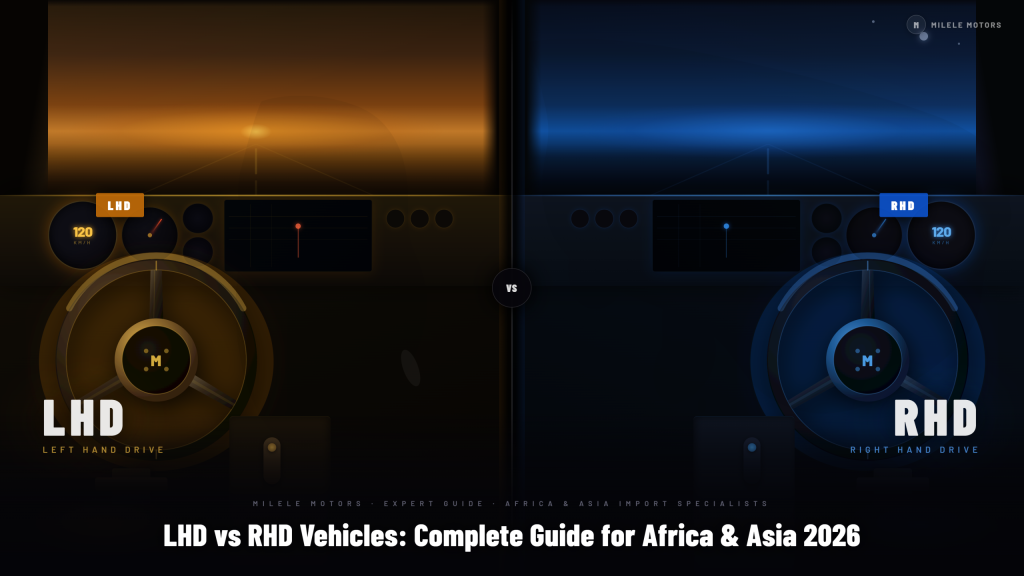
LHD stands for Left-Hand Drive. The steering wheel sits on the left side of the vehicle. RHD stands for Right-Hand Drive. The steering wheel sits on the right side. These terms describe the steering wheel position — not the side of the road you drive on.
However, the two are directly linked. In countries where traffic drives on the right side of the road, the driver needs to sit on the left. So LHD vehicles are standard. In countries where traffic drives on the left, the driver sits on the right. So RHD vehicles are standard. According to current global traffic data [opens in new tab], 176 countries drive on the right (LHD) while 74 countries drive on the left (RHD).
Understanding this is essential before you import any vehicle. Additionally, choosing the wrong type creates real problems — from port rejection to unsafe overtaking conditions on local roads.
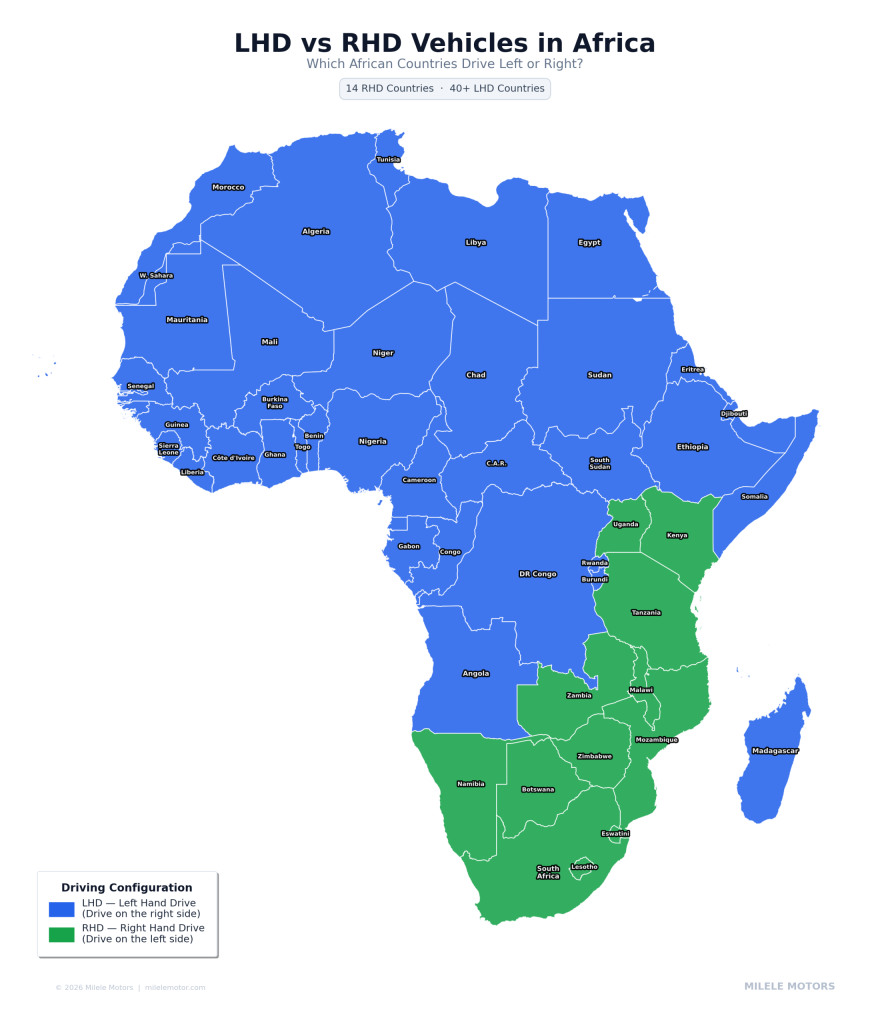
Africa is split between both systems. The divide follows colonial history almost exactly. Former British colonies drive on the left and use RHD vehicles. Most French, Portuguese, and Belgian former colonies drive on the right and use LHD vehicles.
RHD countries in Africa (drive on the left) — these countries require Right-Hand Drive vehicles:
LHD countries in Africa (drive on the right) — these countries require Left-Hand Drive vehicles:
Therefore, always confirm your destination country’s rule before sourcing. Sending an LHD vehicle to Kenya, for example, will result in rejection at Mombasa Port and re-export at your cost.
Asia is predominantly LHD — however, some of the continent’s largest markets are RHD. The key distinction is between South and South-East Asian nations (mostly RHD due to British and Japanese influence) and mainland Asia and the Middle East (mostly LHD).
RHD countries in Asia (drive on the left) — require Right-Hand Drive vehicles:
LHD countries in Asia (drive on the right) — require Left-Hand Drive vehicles:
Furthermore, the Middle East is entirely LHD — which aligns perfectly with UAE-sourced GCC-spec vehicles that are already left-hand drive. This makes the UAE an ideal export hub for buyers across the Middle East and most of West Africa.
In most countries, both LHD and RHD vehicles can technically be owned and driven. However, registering the non-standard type is often complicated and sometimes restricted. A small number of countries do formally prohibit registration of the wrong configuration.
Saudi Arabia, for example, formally restricts RHD vehicle registration in its right-hand traffic environment. Sierra Leone has similar restrictions. Taiwan has also applied limitations. However, in most African and Asian markets, the registration is legally possible — but it creates practical problems.
Operating the wrong drive type is genuinely dangerous. A right-hand drive vehicle in a right-hand traffic country (like Nigeria) places the driver on the wrong side to judge overtaking safety. Most buyers choose to source the correct configuration from the outset. It is always the smarter, safer, and simpler option.
As noted by global traffic convention guides [opens in new tab], the standard configuration is rarely a legal requirement but is nearly always the practical one.
LHD vehicles are produced in far higher volumes globally because the majority of countries drive on the right. This makes LHD vehicles slightly more available and competitively priced across most markets. RHD vehicles are manufactured in large volumes for specific markets — Japan, the UK, India, Thailand — and are widely available through exporters serving those markets.
From the UAE, both configurations are accessible. GCC-specification vehicles from the UAE domestic market are LHD — making the UAE an excellent source for West African buyers (Nigeria, Ghana, Senegal), Middle Eastern buyers, and Central Asian importers. RHD vehicles sourced through the UAE, originally from Japan or other RHD markets and re-exported, serve East African and South Asian buyers very effectively.
The key point is this: unlike exporters based in Japan (primarily RHD) or the United States (primarily LHD), a UAE-based exporter with full stock access gives buyers from any country the exact configuration they need — from a single supplier, with unified documentation and logistics.
The UAE sits at the crossroads of global vehicle trade. Dubai’s Jebel Ali Port handles vehicle cargo from Japan, the United States, Europe, and the wider GCC. This means UAE-based exporters have access to both LHD and RHD inventory simultaneously — a flexibility that most other export origins simply cannot offer.
Additionally, the UAE’s free zone structure means vehicles can be imported, re-conditioned, and re-exported without complex duties or restrictions. A dealer in Nigeria can order LHD Toyota Land Cruisers. At the same time, a dealer in Kenya can order RHD Toyota Hilux pickups. Both orders can come from the same UAE supplier, with the same documentation process, and ship from the same port.
This is one of the core operational advantages of sourcing from the UAE — and one of the main reasons why the UAE accounts for such a significant share of vehicle exports to both Africa and Asia.
Milele Motors maintains LHD and RHD inventory across all vehicle categories. Our stock covers passenger cars, SUVs and 4x4s, commercial pickups and trucks, off-road vehicles, ambulances and emergency vehicles, and spare parts — in both configurations.
For buyers sourcing across multiple markets simultaneously, we can handle mixed LHD and RHD orders in a single transaction. We confirm the correct specification for your destination country before any vehicle is committed to your order. If you are unsure which type you need, our export team will advise based on your destination.
With over 40 years of export experience and 100,000+ vehicles shipped, we understand the specific requirements of every major African and Asian market. No order leaves our yard in the wrong specification.
Ready to order? Contact the Milele Motors team for availability and pricing, or browse our full inventory now.
Find out which side of the road traffic drives on in your country. If traffic drives on the right, you need an LHD vehicle. If traffic drives on the left, you need an RHD vehicle. In Africa, most East and Southern African countries (Kenya, Tanzania, South Africa, Zambia) drive on the left and need RHD. Most West and Central African countries (Nigeria, Ghana, Senegal) drive on the right and need LHD.
Technically possible but extremely expensive. Conversion requires reconfiguring the steering column, pedal assembly, dashboard, airbag systems, and safety certifications. In practice, the cost almost always exceeds the value of the vehicle. It is always more cost-effective to source the correct specification from the start through a supplier like Milele Motors who stocks both types.
Yes. Milele Motors maintains inventory in both LHD and RHD configurations across all vehicle categories — passenger cars, SUVs, pickups, trucks, ambulances, off-road vehicles, and emergency vehicles. We confirm the correct specification for your destination country before any order is confirmed.
In most countries, yes — technically legal but practically inconvenient and sometimes dangerous. A small number of countries (Saudi Arabia, Sierra Leone, Taiwan) do formally restrict registration of the non-standard configuration. In most African and Asian markets, registration is possible but the wrong drive type creates real safety issues, particularly when overtaking.
Toyota Land Cruiser and Toyota Hilux are the most popular LHD models exported to West African markets like Nigeria and Ghana. Both models come in LHD GCC-specification from the UAE and are highly valued for their durability on West African roads. Milele Motors stocks both models in LHD configuration.
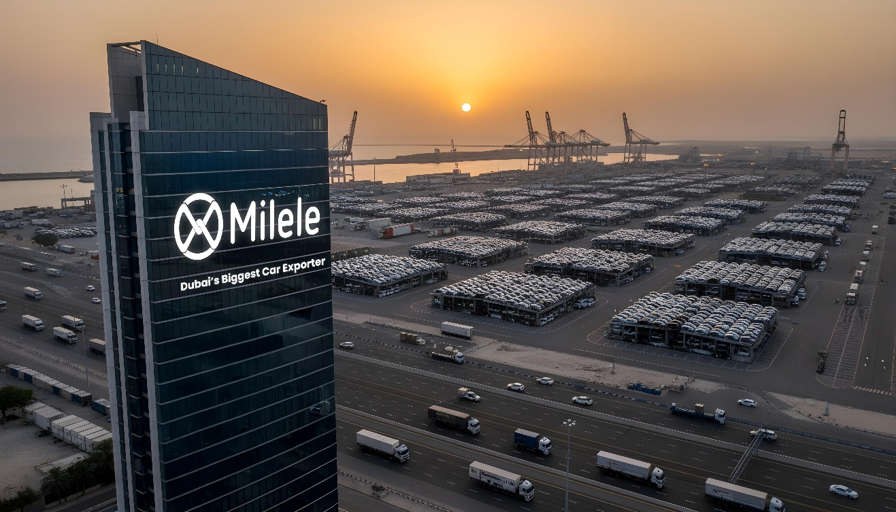
Every 30 seconds, a vehicle leaves Dubai bound for another continent, and Milele Motors is one of the engines powering that global momentum. In 2025, Dubai has become the nerve center of global automotive movement, a place where vehicles pass through with the same speed and precision you’d expect from the world’s top financial exchanges. The UAE’s largest port, Jebel Ali, now moves more than 19.3 million TEU annually, making it one of the busiest and most efficient maritime gateways worldwide (DP World: https://www.dpworld.com). But behind the cranes, digital customs portals, and roaring RoRo ramps lies another story, the rise of Milele Motors, one of Dubai’s most influential export engines.
As global supply chains struggle to recover, Milele Motors is accelerating while the rest of the world hits the brakes. With 160,000+ new vehicles exported to 85 countries, the company has become a powerhouse in the automotive export industry. And here’s the real advantage: Milele Motors has uninterrupted access to 93+ international brands, ensuring that buyers from Africa to Europe get the vehicles they want, when they want them bypassing the delays and shortages crippling other markets.
Dubai’s infrastructure does a lot of heavy lifting. Jebel Ali Port is not only the biggest man-made harbor on the planet, it’s the reason exporters can get vehicles from Dubai to East Africa in as little as seven days, but a speed also no other hub currently matches. The city’s fully digital customs system, run by Dubai Customs, processes export documentation, inspections, and clearances faster than nearly any global counterpart (https://www.dubaicustoms.gov.ae). For international buyers, that speed translates into real commercial advantage: predictable delivery, minimized downtime, and easier fleet planning.
But efficiency alone doesn’t explain Milele Motors’ rise. What sets the company apart in 2025 is credibility. In a global market where buyers often struggle with unreliable exporters, hidden fees, or unclear documentation, Milele Motors brings structure and transparency. Every unit is inspected, documented, and shipped through a standardized internal system, a level of operational discipline that has earned the company long-term partnerships with governments, dealership groups, NGOs, and commercial fleet operators worldwide.
Dubai’s strategic location is the engine behind Milele Motors’ momentum. Positioned between Europe, Asia, and Africa, the UAE has effectively become the world’s central junction for automotive movement supported by one of the most sophisticated re-export ecosystems globally (Dubai Maritime Authority: https://dma.gov.ae). When combined with Milele Motors’ 250+ dealership alliances, strong shipping capabilities, and seamless export operations, the result is a supply channel so efficient it regularly outperforms established markets such as Japan, the UK, and the U.S.
Ultimately, Dubai offers the ecosystem, while Milele Motors turns that ecosystem into impact. Together, they have built a distribution powerhouse that is reshaping the world sources and receiving brand-new vehicles in 2026. As global trade continues to evolve, Milele Motors stands distinguished leveraging Dubai’s unmatched logistics to deliver consistency, confidence, and competitive strength to buyers worldwide.
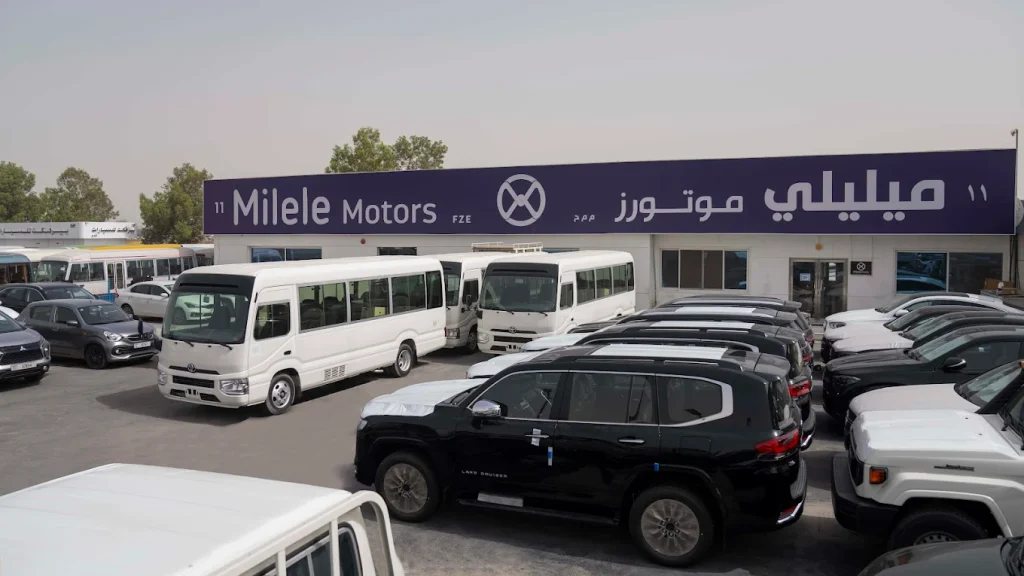
The global car export market continues to grow, especially across Africa and emerging regions, but with this growth comes an increase in car export scams. Buyers searching for vehicles from the UAE often fall victim to fraud due to lack of information, urgency, or misleading offers. Understanding common car export scams and knowing how to avoid them can help protect your investment and ensure a smooth vehicle export process.
Unrealistically Low Car Export Prices
One of the most common vehicle export scams involves prices that are far below the market average. Fraudulent sellers use low prices to attract buyers quickly, often claiming limited availability or urgent shipping deadlines. In reality, legitimate car exporters price vehicles based on market value, vehicle condition, shipping costs, and compliance requirements. At Milele Exports, we encourage buyers to research prices and work only with exporters who provide transparent and realistic quotations.
Fake Car Export Documents and Shipping Papers
Fake documentation is another major risk in the car export industry. Scammers may provide forged invoices, shipping receipts, or export certificates to appear credible. These issues typically arise when the vehicle fails to clear customs or cannot be tracked through official shipping channels. Milele Exports ensures that all export documentation, including invoices and shipping details, is verified, traceable, and shared with customers at every stage of the process.
No Communication After Payment
A common warning sign of a car export scam is when communication stops after payment is made. Buyers are often left without updates, shipping confirmations, or delivery timelines. Reliable car exporters maintain consistent communication throughout the transaction. Milele prioritizes transparency and regular updates so customers always know the status of their vehicle export.
Unsafe Payment Methods in Car Export Deals
Scammers frequently request payments through personal bank accounts or unverified channels, making recovery difficult if fraud occurs. Milele advises buyers to work only with registered car export companies that use official corporate bank accounts and issue proper invoices and receipts. Secure payment practices are essential for safe vehicle exporting from the UAE.
How to Choose a Trusted Car Export Company
The most effective way to avoid car export fraud is to partner with a trusted exporter with proven experience, a physical presence, and verifiable references. Buyers should take time to understand the export process, review credentials, and ask the right questions before committing.
At Milele Exports, we focus on transparency, verified processes, and long-term partnerships. Our goal is to make car exporting from the UAE safe, reliable, and stress-free for buyers worldwide.
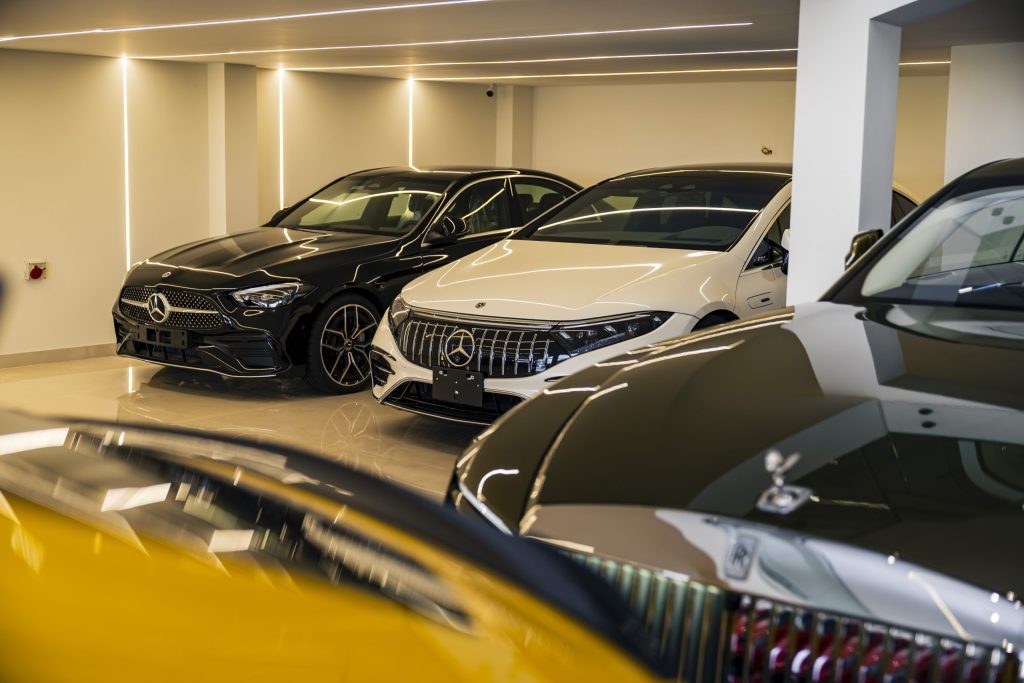
Dubai has become one of the most trusted global hubs for vehicle exports, and Senegal is among the fastest-growing destinations for imported cars from the UAE. With its strong port infrastructure, competitive vehicle pricing, and access to high-quality international stock, Dubai offers Senegalese buyers an efficient and cost-effective import solution. Understanding the import process from Dubai to Senegal is essential to ensure a smooth, compliant, and profitable vehicle purchase.
The first step in importing a car from Dubai to Senegal is selecting the right vehicle. Buyers usually look vehicles that are well maintained, competitively priced, and suitable for West African road conditions. Dubai’s automotive market offers a wide range of used and new vehicles, including sedans, SUVs, pickups, and commercial vehicles. At Milele Motors, vehicles are carefully sourced, inspected, and verified to meet export standards, ensuring buyers receive reliable cars with clear documentation.
Once the vehicle is selected, export documentation is prepared in Dubai. This includes the original invoice, export certificate, vehicle deregistration documents, and the bill of lading. These documents are crucial for customs clearance in Senegal. Milele Motors manages the complete export paperwork process, reducing delays and ensuring compliance with both UAE and Senegalese regulations. Accurate documentation helps prevent issues at the port of entry and ensures faster vehicle release.
Shipping is the next critical stage in the import process. Vehicles from Dubai are typically shipped to Senegal via RoRo or container shipping, depending on budget, vehicle type, and protection requirements. The Port of Dakar is the primary entry point for vehicles imported into Senegal and is well equipped to handle automotive cargo. Milele Motors works with reliable shipping partners to provide secure, timely, and cost-efficient shipping solutions, while keeping customers informed throughout the transit period.
Upon arrival in Senegal, customs clearance and vehicle registration take place. Import duties, taxes, and port handling charges must be paid based on the vehicle’s age, engine capacity, and declared value. Senegal has specific regulations regarding vehicle age limits and emission standards, making it important to import compliant vehicles only. Milele Motors guides buyers through Senegal’s customs process by providing accurate valuation documents and ensuring all compliance requirements are met.
After customs clearance, the vehicle can be registered locally and legally driven in Senegal. This final step includes obtaining license plates, insurance, and roadworthiness approval. By working with an experienced exporter like Milele Motors, buyers avoid common challenges such as documentation errors, shipment delays, and unexpected costs.
In conclusion, importing a car from Dubai to Senegal is a smart investment when done through a trusted automotive export partner. With transparent pricing, verified vehicles, complete documentation, and end-to-end support, Milele Motors simplifies the entire import process from Dubai to Senegal. Whether you are an individual buyer or a dealer looking to scale your business, Milele Motors delivers reliability, expertise, and value at every stage of the journey.
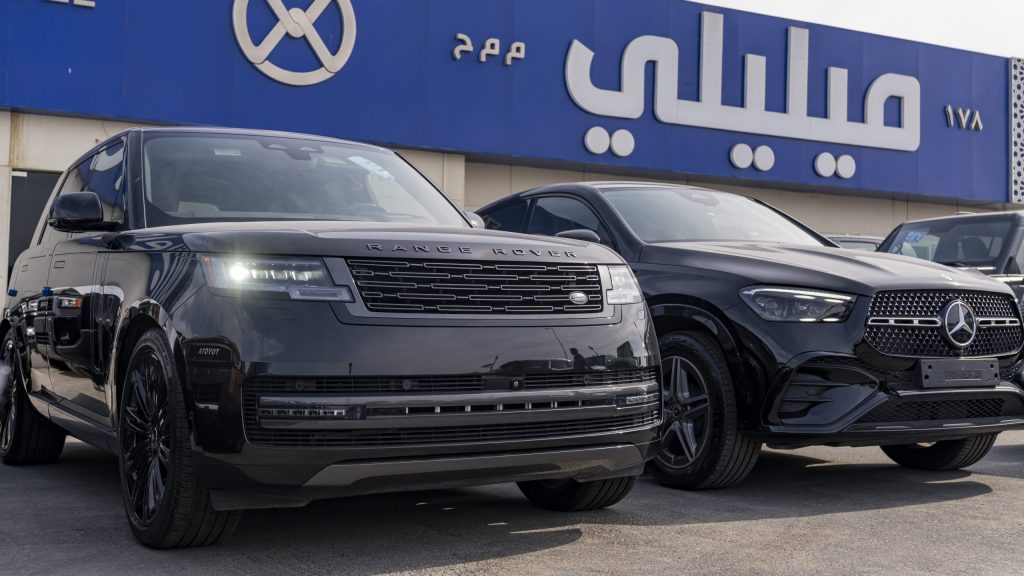
A Dream That Started Beyond Cars
Every great company begins with a bold idea, but Milele Motors was built on something far more ambitious, a vision that extends beyond simply selling cars. It began with a question: what if mobility could be seamless, borderless, and accessible to everyone? In a world where the automotive industry often operates in silos, Milele Motors set out to break barriers and build a connected ecosystem that redefines how people buy, rent, and experience vehicles globally. This is not just a business story; it is the blueprint of a movement shaping the future of mobility.
Rewriting the Rules of Global Automotive Trade
Traditional automotive trade is complex, fragmented, and often inefficient. Milele Motors saw an opportunity where others saw limitations. By creating a streamlined export network, the company transformed how vehicles move across continents, particularly into high-demand regions like Africa and emerging markets. Instead of following outdated systems, Milele Motors engineered a faster, smarter, and more transparent process. This disruption has not only expanded access to vehicles but also empowered businesses and individuals to participate in a more connected global automotive economy.
From Transactions to an Ecosystem Mindset
What sets Milele Motors apart is its refusal to think in transactions. Selling a car is just one piece of a much larger puzzle. The company is actively building a full-scale automotive ecosystem that integrates car exports, rentals, mobility services, and future-ready solutions. This ecosystem approach creates a powerful network effect, where each service strengthens the other. Customers are no longer just buyers; they become part of a system designed to serve their evolving mobility needs at every stage of life.
Technology as the Engine of Transformation
Behind this bold vision lies a strong technological backbone. Milele Motors is leveraging data, automation, and AI-driven insights to optimize operations and enhance customer experiences. From smarter inventory management to digital platforms that simplify the buying journey, technology is not an add-on it is the engine driving the entire ecosystem forward. This commitment ensures that Milele Motors is not just keeping up with industry trends but actively shaping them.
A Brand Built on Trust, Speed, and Opportunity
In global markets, trust is everything. Milele Motors has built its reputation by delivering on promises quality vehicles, competitive pricing, and reliable service. But beyond that, it offers something even more valuable: opportunity. For entrepreneurs, governments, and businesses, Milele Motors opens doors to new possibilities by making automotive access easier and more efficient. This focus on trust and speed has positioned the brand as a preferred partner in multiple international markets.
The Road Ahead: Building More Than a Company
Milele Motors is not chasing short-term success; it is building a legacy. The vision is clear to become a global leader in automotive mobility by continuously expanding its ecosystem and embracing innovation. As the world moves toward smarter, more connected transportation, Milele Motors is already laying the foundation for what comes next. This is not just about cars. It is about creating a future where mobility is limitless, and Milele Motors stands at the center of it all.
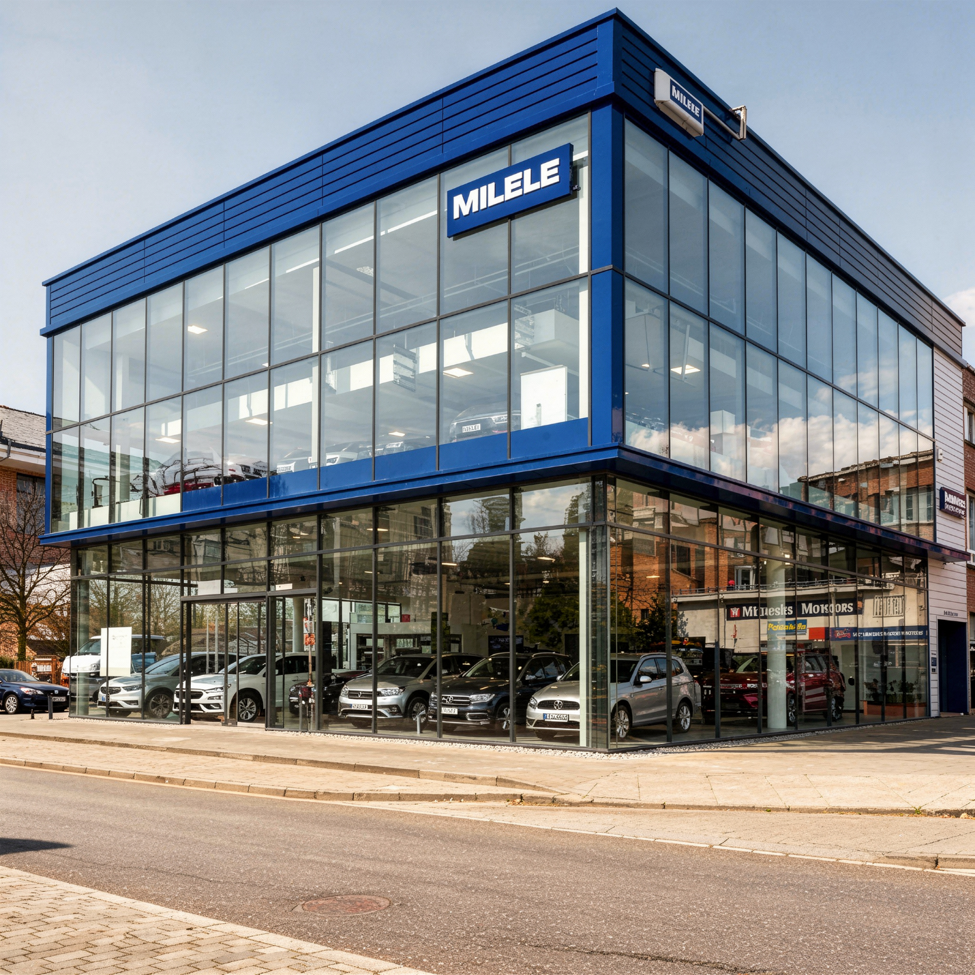
Milele Motors is accelerating its global footprint with a strategic move into Europe, marked by the launch of its Belgium showroom. This expansion represents a significant milestone in the company’s journey to becoming a global automotive leader. By establishing a physical presence in Belgium, Milele Motors strengthens its accessibility to European customers while reinforcing its reputation as a trusted name in automotive trading, mobility solutions, and vehicle exports.
Belgium as a Gateway to the European Automotive Market
Belgium serves as a crucial entry point into the European automotive market due to its central location, advanced logistics infrastructure, and strong trade connectivity. Milele Motors has strategically chosen Belgium to leverage these advantages, enabling faster distribution across neighboring countries such as Germany, France, and the Netherlands. The showroom acts as both a display hub and a distribution center, allowing customers to experience vehicles firsthand while ensuring efficient delivery across Europe.
Diverse Inventory Catering to Global Demand
One of Milele Motors’ core strengths lies in its diverse vehicle inventory, which includes hatchbacks, sedans, SUVs, and 7-seaters from globally recognized brands such as Toyota, Nissan, Hyundai, Kia, and Mitsubishi. The Belgium showroom showcases a curated selection tailored to European preferences while maintaining the flexibility to source vehicles based on specific customer requirements. This adaptability ensures Milele Motors meets the needs of both individual buyers and corporate clients across various markets.
Strengthening the Global Distribution Network
Beyond the showroom, Milele Motors continues to expand its robust global distribution network. With established operations in the Middle East, Africa, and Asia, the company is known for its efficient logistics, competitive pricing, and reliable export services. The European expansion integrates seamlessly into this network, allowing Milele Motors to streamline supply chains and reduce delivery times. Customers benefit from a well-connected system that ensures vehicles are sourced, processed, and delivered with maximum efficiency.
Driving Innovation in Automotive Mobility
Milele Motors is not just focused on vehicle sales; it is committed to redefining automotive mobility. By combining technology, logistics expertise, and customer-centric services, the company is positioning itself at the forefront of modern mobility solutions. The Belgium showroom reflects this vision, offering a professional and transparent buying experience supported by expert guidance, flexible purchasing options, and end-to-end service support.
Building Trust Through Quality and Reliability
Trust and reliability remain at the core of Milele Motors’ operations. The company ensures strict quality checks, transparent documentation, and seamless transaction processes for every vehicle. Its growing presence in Europe further enhances credibility, providing customers with confidence in both product quality and service standards. This commitment has helped Milele Motors build long-term relationships with clients ranging from individual buyers to large-scale businesses and government entities.
The Road Ahead for Milele Motors in Europe
The launch of the Belgium showroom marks just the beginning of Milele Motors’ European expansion strategy. With plans to further strengthen its presence, enhance partnerships, and explore new markets, the company is poised for sustained growth. By combining its global expertise with localized operations, Milele Motors is set to redefine automotive accessibility in Europe while continuing to deliver on its promise of “Automotive, Mobility and Beyond.
Toyota Land Cruiser – Built for Extreme Durability
The Toyota Land Cruiser is one of the most reliable SUVs for South American roads, especially in rugged and remote areas. It comes equipped with a powerful 4.0L V6 or 3.3L diesel engine, delivering strong torque for steep inclines and off-road terrain. With full-time 4WD, differential locks, and a high ground clearance of around 230 mm, it handles mud, sand, and rocky paths with ease. Its heavy-duty suspension system ensures stability on uneven roads, while the strong body-on-frame construction enhances durability. The Land Cruiser is ideal for users who prioritize reliability, off-road capability, and long-term performance.
Toyota Fortuner – Balance of Power and Efficiency
The Toyota Fortuner offers a perfect blend of durability and affordability, making it a popular choice across South America. It features a 2.4L or 2.8L diesel engine, known for fuel efficiency and strong torque output. Equipped with part-time 4WD, hill assist, and traction control, it performs well on both highways and off-road routes. The Fortuner provides a ground clearance of approximately 225 mm, ensuring safe passage over rough terrain. Its relatively lower maintenance costs and widespread availability of parts make it a practical and economical option.
Mitsubishi Pajero Sport – Strong Off-Road Performer
The Mitsubishi Pajero Sport is engineered for challenging environments with a focus on off-road performance. It is powered by a 2.4L turbo diesel engine, delivering reliable torque for heavy-duty driving. The SUV includes Super Select 4WD-II system, allowing seamless switching between driving modes for different terrains. With a ground clearance of around 218 mm and advanced features like hill descent control and off-road modes, it is well-suited for mountainous and rural areas. Its durable chassis and suspension system ensure long-term reliability.
Nissan Patrol – Power Meets Comfort
The Nissan Patrol is designed for those who need both power and comfort in demanding conditions. It comes with a 5.6L V8 petrol engine, offering high performance and towing capacity. The Patrol features intelligent 4WD, hydraulic body motion control, and terrain management systems, ensuring smooth handling on rough roads. With a ground clearance of approximately 275 mm, it is one of the best options for extreme off-road conditions. While fuel consumption is higher, its durability and premium build quality make it a strong contender.
Toyota Prado – Versatile and Reliable
The Toyota Prado is a mid-range SUV that combines off-road capability with everyday usability. It is equipped with a 2.8L turbo diesel engine, offering a balance of power and efficiency. The Prado includes full-time 4WD, multi-terrain select, and crawl control, making it suitable for various road conditions. Its ground clearance of around 215 mm and advanced suspension system provide a comfortable yet capable driving experience. It is ideal for users who need a versatile SUV for both city and off-road use.
Chevrolet Trailblazer – Value for Money Option
The Chevrolet Trailblazer offers a cost-effective solution without compromising essential capabilities. It is powered by a 2.5L or 2.8L diesel engine, delivering decent performance for daily and off-road driving. The SUV features 4WD capability, electronic stability control, and traction control, ensuring safety on uneven terrain. With a ground clearance of approximately 221 mm, it can handle most road conditions found in South America. Its affordability and reasonable maintenance costs make it a practical choice for budget-conscious buyers.
Final Thoughts: Choosing Based on Specifications
When selecting the best SUV for South American roads, focusing on specifications such as engine performance, ground clearance, drivetrain (4WD/AWD), and suspension strength is essential. Vehicles like the Land Cruiser and Patrol are ideal for extreme conditions, while Fortuner, Prado, and Trailblazer offer a balance of cost and capability. By prioritizing these specifications, buyers can ensure durability, efficiency, and long-term value in challenging environments.
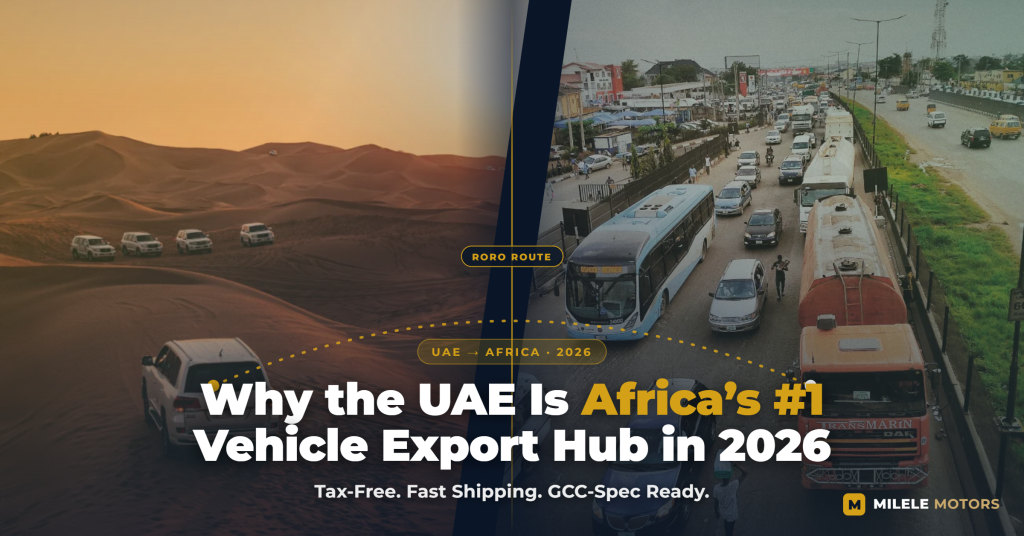
If you are sourcing vehicles for export to Africa, where you buy matters as much as what you buy. Pricing, documentation, shipping routes, and stock availability all change depending on the origin country. In 2026, the UAE leads every other market for UAE Vehicle Export to Africa, thanks to tax-free pricing, world-class port infrastructure, and a deep inventory of GCC-spec vehicles built for African conditions. Here is why Dubai is the top choice for fleet buyers, dealers, NGOs, and government agencies across the continent.
The UAE runs a largely tax-free automotive market. There is no personal income tax. There is no vehicle purchase tax. Vehicles held in free zones like Jebel Ali Free Zone (JAFZA) are fully exempt from import and export duties. This makes vehicle export UAE to Africa one of the most cost-effective sourcing routes in the world.
Buyers consistently save 20 percent compared to buying the same vehicle in their home country. For a fleet order of 20 vehicles, that saving can cover all shipping, port clearance, and logistics — and still leave money on the table. Additionally, the UAE’s competitive domestic market means prices stay low even before export incentives kick in.
Jebel Ali Port, run by DP World, is the ninth-largest container port in the world. Its Roll-on/Roll-off (RoRo) terminal handles up to one million car equivalent units (CEUs) per year [opens in new tab]. For African buyers, that infrastructure translates into real advantages:
Furthermore, the UAE accounts for 21 percent of automotive trade into Africa [opens in new tab] — about 7 billion metric tonnes of cargo annually. No other origin country comes close to that level of dedicated capacity for African markets.
GCC-specification vehicles are engineered for extreme heat, dusty terrain, and heavy daily use. These are the same conditions found across much of Sub-Saharan Africa. As a result, GCC-spec vehicles need far fewer modifications for African roads than European or North American-spec alternatives.
Standard GCC-spec features include:
Therefore, buyers avoid costly post-import modifications. The vehicle arrives ready for African conditions straight off the vessel. European-spec vehicles, by contrast, often need upgraded cooling and suspension before deployment in the field.
Milele Motors maintains thousands of vehicles in stock, covering every category African buyers need. Browse our full inventory to see what is available right now.
Our stock includes vehicles sourced from four main channels:
Whether you need an SUV or 4×4 for East African terrain, a commercial pickup or truck for fleet operations, or a certified ambulance or emergency vehicle for a healthcare organisation, Milele Motors has it in stock.
Africa is split between two driving systems. West and Central African countries — Nigeria, Ghana, Senegal, Côte d’Ivoire — drive on the right and require Left-Hand Drive (LHD) vehicles. East and Southern African countries — Kenya, Tanzania, Uganda, South Africa, Zambia — drive on the left and require Right-Hand Drive (RHD) vehicles.
This is a key advantage of UAE vehicle export to Africa over Japan, which mainly exports RHD, or the United States, which mainly exports LHD. The UAE supplies both. Milele Motors stocks LHD and RHD inventory across all categories, so buyers from any African market get the right specification — without compromise.
Japan restricts the export of older vehicles through mandatory inspections and documentation requirements. The UAE does not. There are no mileage limits and no age caps on vehicles re-exported from the UAE. This gives buyers much more flexibility.
You choose the vehicle age that suits your destination country’s import rules. Kenya enforces an 8-year limit. Tanzania enforces a similar rule. But Nigeria and Ghana allow older vehicles. In each case, you select the right vehicle for your market — and the UAE’s open re-export policy means the source country never limits your options.
Milele Motors has been managing vehicle exports for over 40 years. We handle every stage of the process on your behalf. There is no need to coordinate multiple parties or navigate UAE export rules alone.
Our end-to-end service covers:
This is especially valuable for institutional buyers — NGOs, government agencies, hospitals, and embassies. They get a single point of accountability from order to port arrival. There are no surprises at customs.
Milele Motors is one of the UAE’s most trusted vehicle exporters. We have exported over 100,000 vehicles since our founding in the 1980s. We partner with 40+ international brands including Toyota, Honda, Nissan, and more.
Our inventory covers cars, SUVs, trucks, vans, ambulances, mobile clinics, off-road vehicles, and spare parts. All are available in LHD and RHD, across diesel and petrol, manual and automatic. We ship to 75+ countries across Africa, Asia, and beyond.
However, what sets Milele apart is not just the inventory. It is the full-service approach. We manage documentation, inspections, logistics, and compliance — so your vehicles arrive on time, in the right specification, and with zero port complications.
Ready to start? Contact the Milele Motors team for a free quote, or browse our full inventory to find your vehicle today.
Japan mainly exports RHD vehicles and enforces strict pre-export inspection requirements. The UAE offers both LHD and RHD, has no re-export age restrictions, ships faster to African ports, and provides tax-free pricing that beats Japan on landed cost for most markets. Additionally, UAE exporters like Milele Motors handle full documentation in-country, simplifying the process for African buyers.
Transit from Jebel Ali Port to Mombasa takes 7–10 days. To Dar es Salaam it is similar. To West African ports like Lagos, expect 14–18 days depending on the vessel schedule. Total time from order to port arrival — including documentation and inspection — is typically 2–4 weeks for in-stock vehicles.
Yes. Milele Motors maintains LHD and RHD inventory across all vehicle categories. If you are supplying to multiple African markets with different driving conventions, we can split a single order into LHD and RHD shipments and coordinate separate port deliveries.
Yes. Milele Motors arranges all required pre-shipment inspections before loading, including SGS, Bureau Veritas, JEVIC, and QISJ certificates depending on the destination country. We confirm compliance with each market’s import rules — age limits, RHD requirements, and roadworthiness standards — before any vehicle is committed to your order.
Milele Motors exports cars, SUVs, pickups, trucks, vans, buses, ambulances, mobile clinics, off-road vehicles, and spare parts. We cover passenger, commercial, emergency, and specialised vehicle categories — all from a single exporter in Dubai.

A Legacy That Continues in 2026
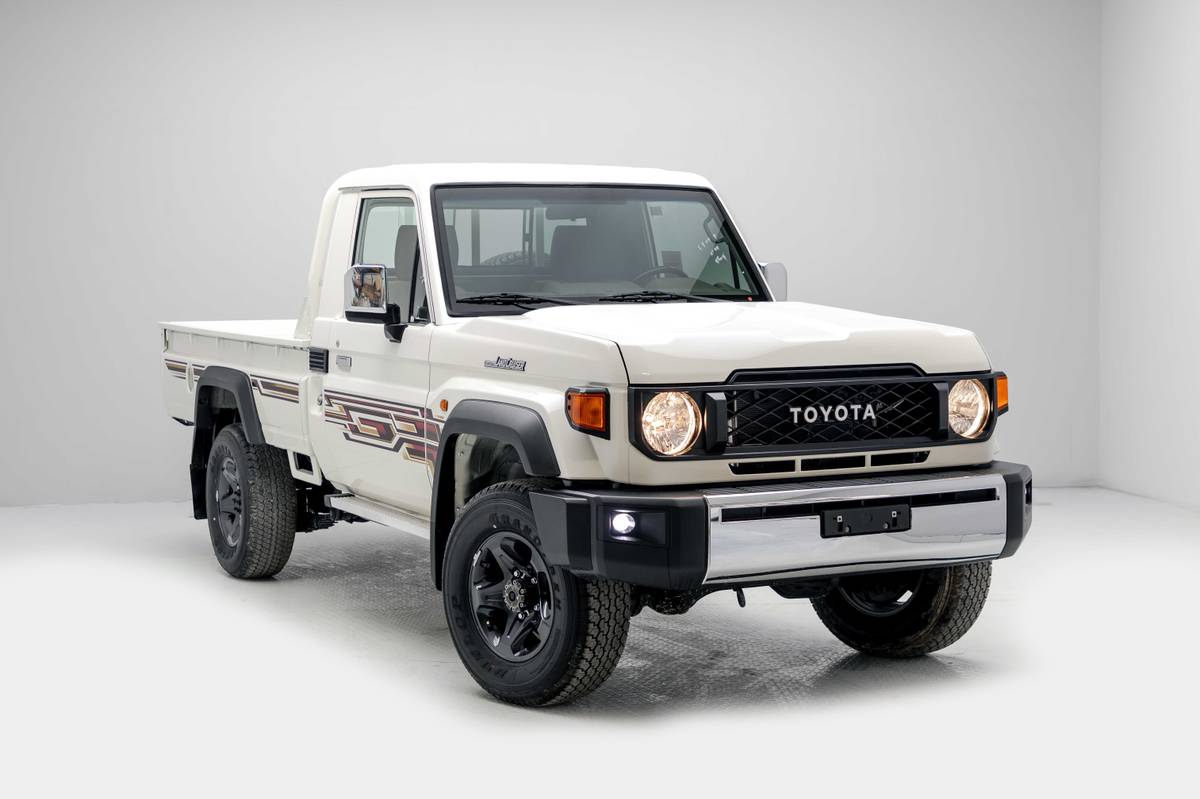
The Toyota Land Cruiser LC79 Double Cabin 2026 represents the continuation of one of the most respected names in the global automotive industry. Built on the legendary 70 Series platform, the LC79 DC is engineered for buyers who prioritize durability, reliability, and long-term performance over trends and unnecessary complexity. In markets where road conditions are unpredictable and workloads are demanding, this model remains a benchmark for heavy-duty utility vehicles.
Powertrain Designed for Real-World Demands
Under the hood, the 2026 LC79 Double Cabin is powered by a proven diesel engine that delivers strong torque and consistent performance across difficult terrains. Whether navigating mountainous routes, unpaved roads, or industrial sites, the LC79 DC offers dependable power that supports heavy payloads and towing requirements. Its robust transmission and four-wheel-drive system are designed to perform under pressure, making it a trusted choice for commercial operators and off-road professionals.
Practical Double Cabin Versatility
One of the key advantages of the LC79 DC is its double cabin configuration, which allows it to comfortably carry passengers while maintaining a functional cargo bed. This balance makes it suitable for mixed-use scenarios, including work crews, family transport, and long-distance travel. The interior focuses on practicality, offering straightforward controls, durable materials, and essential comfort features that support long working hours without compromising reliability.
Built for Harsh Environments
The LC79 DC is engineered to thrive in extreme climates and challenging terrains. Its ladder-frame chassis, reinforced suspension, and high ground clearance allow it to handle heavy loads and rough conditions with confidence. This level of ruggedness is one of the reasons why the model continues to perform strongly in regions such as Central Asia, Africa, and the Middle East, where durability is not optional but essential.
Milele Insights: A Proven Export Favorite
At Milele, the LC79 Double Cabin 2026 stands out as a consistently high-demand model due to its reputation for longevity and resale value. Buyers are not simply investing in a pickup truck but in a long-term asset that delivers reliability, ease of maintenance, and strong market acceptance. From an export and fleet perspective, the LC79 DC remains one of the most dependable and practical choices available today.